
Tooth Extractions Rogers
Remove Troubled Teeth, Protect Your Smile!

It might be frightening to hear that you’re going to need to have a tooth, or multiple teeth, extracted – but you have absolutely nothing to fear! If we’ve suggested this procedure, know that we have the look and health of your smile’s future in mind. You can learn more about the types of tooth extractions that we perform here in our Rogers office below. You are also free to give us a call; we’re here to protect your smile!
Why Choose Metro Park Dental Arts for Tooth Extractions?
- Friendly and Accommodating Dental Team
- Sedation Dentistry Options Available
- Open Five Days a Week
Reasons Why Tooth Extractions Are Necessary

You should know that we will only suggest extracting a tooth if there’s no other way to restore it, or if it poses a threat to the rest of your dental wellness. Here are a few situations that usually require this emergency dental procedure:
- The tooth in question is so decayed that a filling or another type of restoration will not work.
- The tooth has sustained irreparable damage due to physical trauma.
- Gum disease has compromised the tissue surrounding the teeth, causing them to become loose.
- The patient needs teeth removed prior to orthodontic treatment.
- A tooth has become impacted, which means it’s not erupting properly (this is often the case with wisdom teeth).
The Process of Removing a Tooth
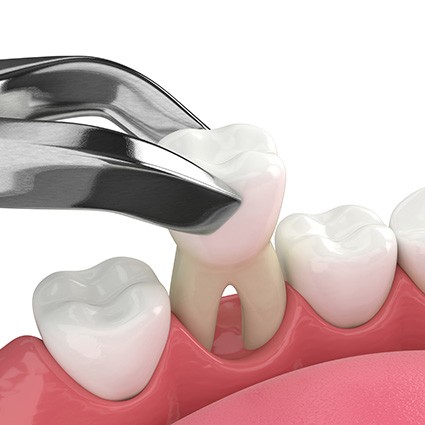
The process of removing a decayed, damaged, or problematic tooth will look slightly different depending on whether or not it has broken through the gumline. If it has, then we can grip the tooth and rock it loose until it’s ready to be removed. If it hasn’t, then we will first need to create a small incision in the gums to access it. Either way, the first step of the entire process is always the same: to numb your mouth thoroughly. That way, you can relax while our emergency dentist performs the extraction.
Tooth Extraction Aftercare

Before you leave our Rogers office, we will provide you with a list of aftercare instructions, like:
- Take prescribed or OTC pain medication as directed
- Use a cold compress for 10 minutes at a time
- Eat only extremely soft foods, like plain yogurt and applesauce
- Don’t smoke, exercise, spit, or drink through a straw
- Keep your head elevated, even while you sleep
Of course, if you have any questions during the healing period or something unexpected happens, like your symptoms start to get worse instead of better, don’t hesitate to call us!
Tooth Extractions FAQs
What Should I Do After My Tooth Extraction?
Once you’ve had your tooth extracted, you must rest. Your body will need time to heal from treatment, and strenuous activity could disrupt your recovery.
In particular, you should do the following during your rest period:
- Avoid intense exercise in the first 24 hours after extraction.
- To avoid a dry socket, keep your gauze pad in place as instructed.
- Don’t touch your empty socket with your tongue or fingers.
- For up to a week after treatment, stick to soft foods like yogurt and applesauce.
- Use a cold compress or pain medication to numb the treatment site.
Aside from the steps above, your dentist may share other aftercare instructions. Make sure to follow them as best you can.
Can I Leave the Space Empty After a Tooth Extraction?
You can technically leave the socket empty post-extraction, but it isn’t wise to do so. This space will reduce your quality of life if it goes unchecked.
Remember, tooth loss – whatever its cause – has harsh side effects. It ruins your grin’s good looks, makes eating and speaking harder, lowers your self-esteem, and so on. A smile gap also harms your oral health by housing harmful bacteria and tilting your other teeth. All that said, you’re much better off filling the empty space with an appropriate restoration.
If you have the time and money, please book a tooth replacement treatment after your tooth extraction. It’ll do your smile a world of good!
What are My Options for Replacing a Missing Tooth?
Depending on how many teeth are removed, you could qualify for several different tooth replacement options. These are:
- Dentures – Considered the “traditional” tooth replacement, a denture can replace several adjacent or non-adjacent teeth. The final number will depend on whether the prosthetic is partial, full, implant-based, etc.
- Dental Bridges – Made of dental crowns fused to a prosthetic tooth, a dental bridge can replace one to four adjacent teeth. It works by securing itself to your two nearest natural teeth, also known as “abutments.”
- Dental Implants – Dental implants are viewed as the “gold standard” of tooth replacement. Because they use quality materials and fuse with your jaw, they look and act almost exactly like natural teeth. They’re also highly durable, preserve your jawbone, and last 30+ years with care.
How Long After a Tooth Extraction Can I Get Dentures?
Whatever you may have thought, you can’t immediately get dentures after a tooth extraction. You’ll need to wait a while for your mouth to heal first.
More specifically, you can only get dentures 6-8 weeks after your initial treatment. That period lets your smile recover and ensures you’re ready to use a prosthetic. Once it’s over, your dentist can take a dental impression that’ll be used to craft your restoration. This model will take your smile’s size, shape, and shade into account, so the resulting denture will look very natural and lifelike.
Once you’ve gotten your dentures, your dentist will provide you with care tips. These instructions will keep your new “teeth” strong and help them last as long as possible.